So you’ve chosen a company to analyze your DNA and they use the data to produce an “ethnicity estimate” to give you a better idea of who your ancestors were. The report comes back and wow! You feel like you understand yourself better – you always knew you were Italian, but 30%? That’s amazing. Portuguese and Spanish ancestry, of course… and look at that little bit of Catalonian and Finnish DNA! Where the hell did that come from?
You bask in this new, better understanding of yourself and your kin, enroll in extracurricular Italian and Spanish classes and book flights to visit a couple of your “ancestral homelands” next summer.
Well, maybe not. When choosing a single company to process and analyze our DNA, you have to keep in mind that they will compare your DNA to the samples they have accumulated over time. Each company has a different smattering of DNA samples from various countries, depending on how long they’ve been in business, how good their advertising and marketing is, and who have chosen to use their services.
Let’s compare two ethnicity estimates for the same person, as illustrated by 23andMe and MyHeritage and decide for yourself.
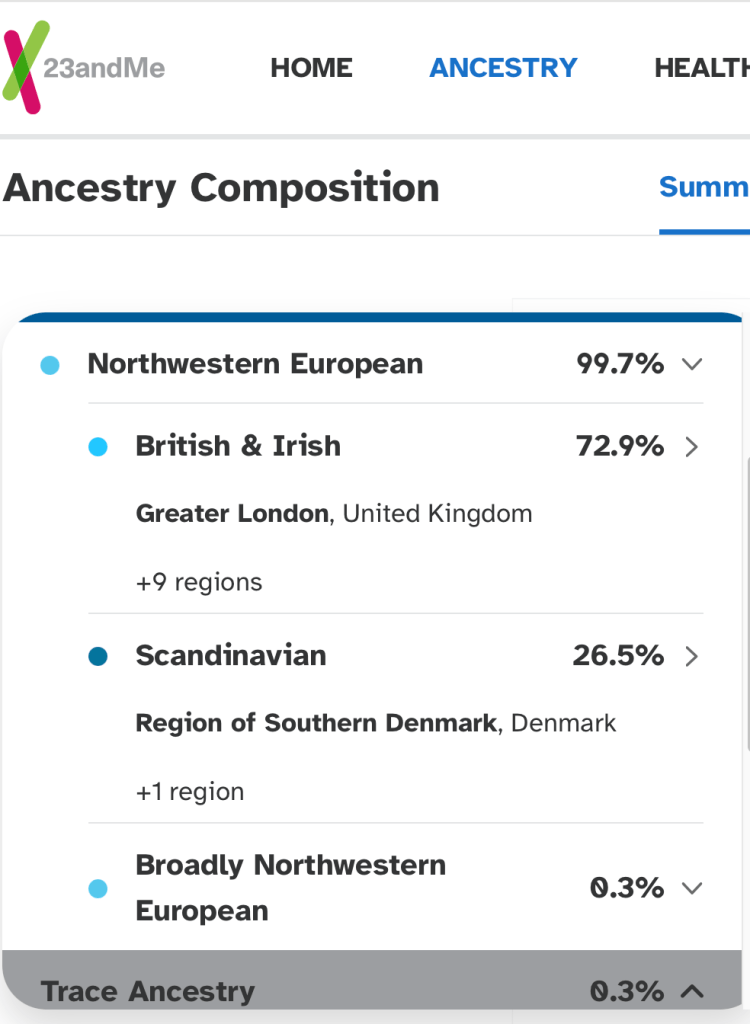
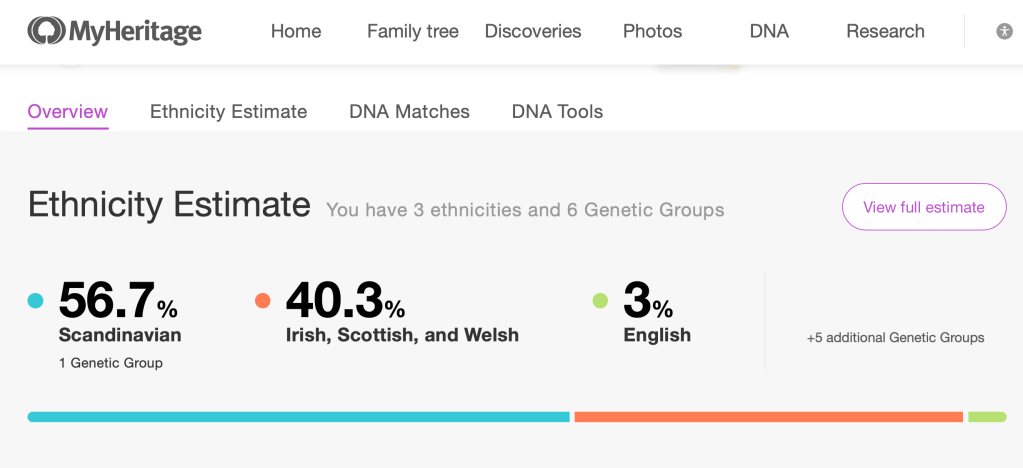
The discrepancy depends heavily on the algorithm used by each company (how they calculate), the regions they define on a map for ethnicity, and their sample size, as each company’s DNA sample population increases over the years and they have more data to compare to.
Faced with these somewhat contradictory reports, I wonder if 23andMe lumps Wales, Ireland and Scotland in under larger umbrella of “British and Irish,” whereas MyHeritage seems to define Celtic/Gaelic populations separately from their AngloSaxon neighbours. Thus, the overwhelming percentage of “British and Irish” in the first image is broken down further in the second to recognize Celtic/Gaelic ancestors.
My advice is to take this all with a grain of salt.
In the case of adoption and unknown parentage, genetic genealogists may use two or more DNA databases in their search to cover as much DNA evidence as they can to triangulate data and reach a conclusion.
You can do the same. If you have already had your DNA analysed by 23andMe or Ancestry, you can download the data and upload it for free to MyHeritage and other sites to access their DNA pools and compare results, as I have shown above. Make sure you trust the company and read their privacy policies before doing so. Then, aggregate the ethnicity estimates if what you’re really looking for is your own particular list of ingredients.
Keep in mind – genealogy is fundamentally the pursuit of documentary evidence regarding our ancestry. Pair what you learn about your DNA with historical documents, photographs and other evidence to get the whole picture of your pedigree (my husband laughs whenever I use that word, but it’s correct).
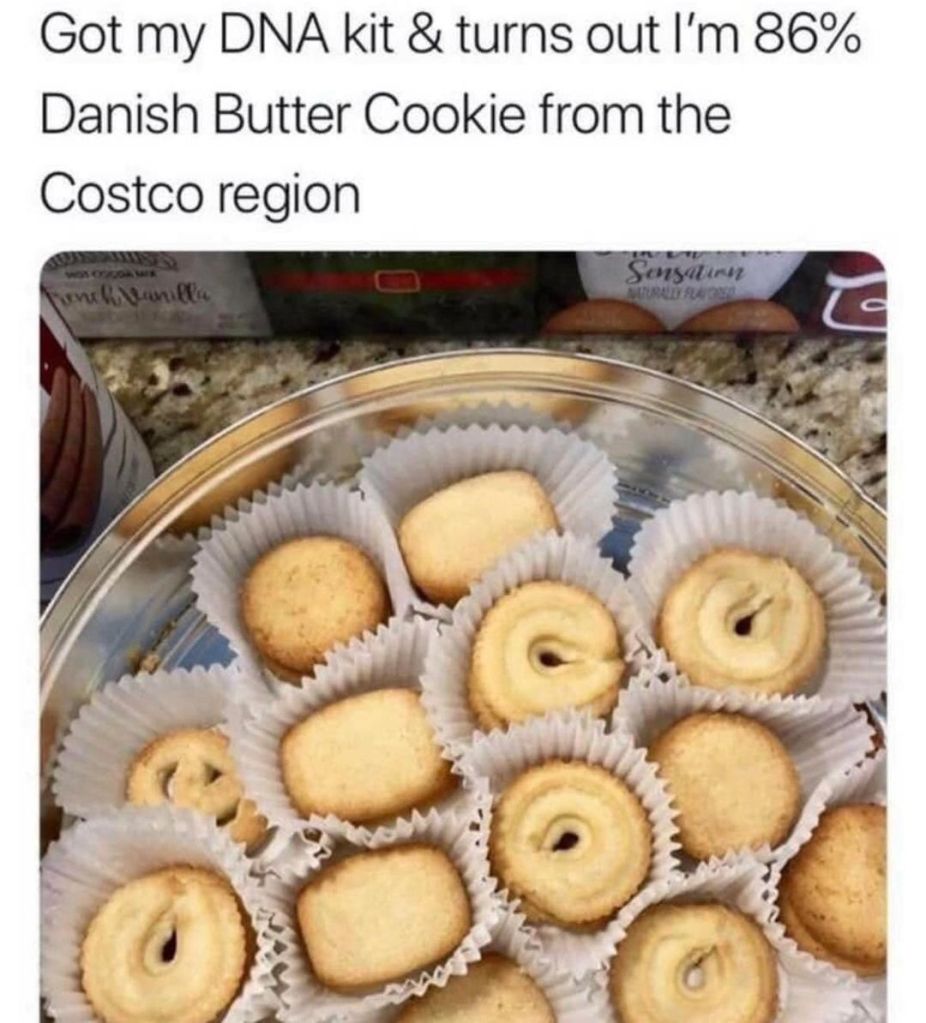
If your have immigration data that shows your ancestor came from Denmark and your DNA shows matches with others from Denmark, congratulations! You probably are Danish. Just how much… now that’s a matter of conjecture.
 Epic Genealogy