Vaccines, cross-border ancestral connections and current global politics

By Kendra Gaede

My mum, who turns 80 today, still remembers the taste of the oral polio vaccine given to her atop a sugar cube in the 1950s.

She also remembers the collective sigh of relief of at the release of the vaccine and its importance in the fight against a disease that indelibly ravaged children and their families forever. This memory of gratitude gets lost in the generations after the Boomers.

Human beings have a tendency to disbelieve what they have not themselves experienced. When you’ve benefitted from decades of polio-free living, its easy to convince yourself the vaccine is no longer necessary. But as we’re seeing with the spread of measles in Texas, the willingness to disbelieve the knowledge and experience of those who came before us can cause tragic consequences.

Up until now, anti-vaxxers have benefitted from the collective immunity of previous vaccinated generations to not get sick. Vaccines work – history has proven it again and again – but they can’t work if you don’t get one.

We can surmount our experiential ignorance by becoming students of history and learning from the past.

Speaking of which, it’s a tough go for students of history right now. Humanity seems determined to repeat itself with willful ignorance.

As we lose the last of our WWII veterans (the Greatest Generation), the Quiet Generation and early Baby Boomers, the world’s collective memory of the horrors of war and global conflict is lost along with them.

So when racism, hypernationalism, facism, and purposeful destabilization of alliances and economies begin to occur again, historians can’t help but ring the alarm bell and for good reason – no one needs a reboot of the conflicts of the first half of the 20th century.

Genealogy and genealogists can help defuse the current political climate by reminding people of a simple truthwe are all related, despite borders, languages, trade barriers and the agendae of world leaders.

My own work studying genealogies of people with ancestors from Western Canada has proven international. It’s rare to find families who have been in one country for four generations (raising the difficulty of exercises toward genealogical accreditation, let me tell you).

The Fur Trade operated before the western U.S./Canada border even existed, and Rupert’s Land once stretched below the 49th paralell. Arguably, parts of North Dakota and Minnesota could have been part of Canada.

Immigration stories are some of my favourites to research. Most of of us have immigrant ancestors – yes, even Donald Trump, whose grandfather, Friederich Drumpf, immigrated to the United States in 1885 to avoid military service in Germany. (A family tradition?) Plenty of American families first arrived on North American shores via Canadian immigration and vice versa.

People choose to immigrate due to things like famine, oppression, and economic instability. I’m proud of my immigrant ancestors. Immigrant labour (my ancestors and yours) has fueled North American economies for at least 200 years. To fear the immigrant is to fear ourselves.

And to anyone who is not Canadian and a historian, let me tell you that the tariffs and threats to our sovereignty smell a lot like Germany in 1938. How do I know that? I read books. Lots of ’em. All the time.

And as president Bill Clinton once said:

“Surely, the human genome is our shared inheritance, and it is fitting and proper that we are all working on it together.”

Let’s work on this together. Support your Canadian genealogist colleagues and disperse this historical truth: Canada and the U.S. work better as respectful friends.
Genealogical artifacts come in many forms

There’s more to original sources and genealogical artifacts than just diaries and letters.

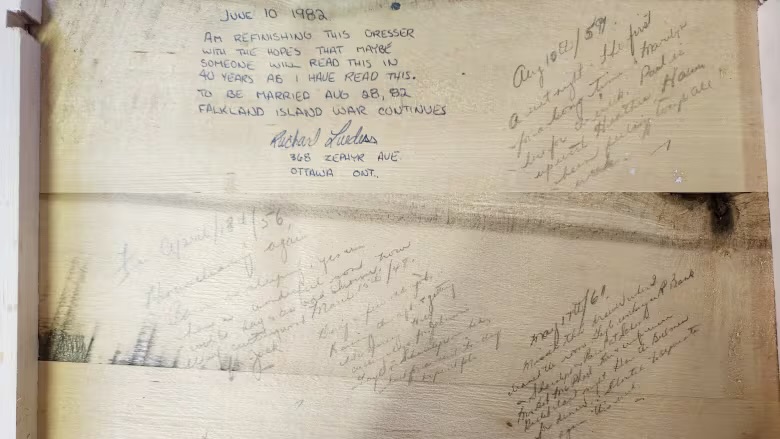
Recently, while refinishing a piece of furniture, Tim Skelly of Lanark, Ontario, discovered a series of handwritten notes on the underside of a drawer. Previous owners of the piece had left messages dating from 1942 to the most recent inscription from 1982.

Here is a link to the story from CBC: https://www.cbc.ca/news/canada/ottawa/notes-left-on-decades-old-dresser-1.7171247

The gentleman’s dresser on which the inscriptions appear is just as much a genealogical artifact as my great Aunt Rie’s pocket diary of her life in Scotland prior to her family’s immigration to Canada. The notes on the drawer provide the provenance of the item, and could be used to support other evidence of an ancestor’s residence or life events.

Richard Lueders’ inscription on the dresser from 1982 mentions his own wedding and the Falklands War – details that add interesting colour and character when writing genealogical reports for clients and family members.

And with new technologies like Transkribus, which can help decipher difficult text, handwriting and other languages, we can unlock further historical information than ever before.

Artifacts such as furniture may seem confusing to cite, but Evidence Explained, by Elizabeth Shown Mills, does provide guidelines for doing so in QuickCheck Model, Private Holdings: Artifact, page 105 of the third edition (I haven’t gotten the new fourth edition yet).

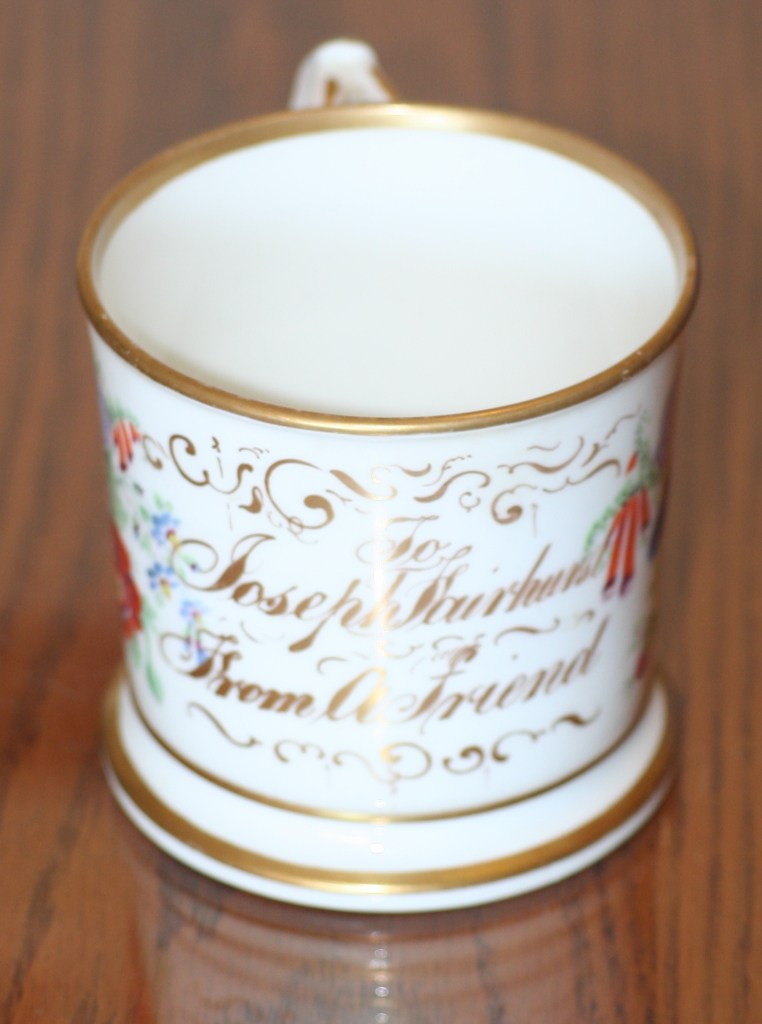
For example, my father has a cup he was given by family in Lancashire that records the name of his third great grandfather. The inscription on it reads: To Joseph Fairhurst, From A Friend.

A citation for this artifact might look something like:

1. Joseph Fairhurst inscribed cup, personalized mug from unidentified manufacturer, in collection of Robert Frederick Gaede, ca. 1840-1885; privately held by Mr. Gaede, Calgary, Alberta, 2024. White cup with gold trim, green and red decoration and inscribed, “To Joseph Fairhurst From A Friend,” received by Mr. Gaede from relatives while visiting Widnes, Lancashire in October, 1970.

This information can be partly verified by a postcard my father sent home at the time:


Inscriptions and information can appear anywhere – from books, to photos, to furniture – so keep an eye out. The past is always calling to us. Be open and vigilant enough to listen!

Lies, damned lies and ethnicity estimates

So you’ve chosen a company to analyze your DNA and they use the data to produce an “ethnicity estimate” to give you a better idea of who your ancestors were. The report comes back and wow! You feel like you understand yourself better – you always knew you were Italian, but 30%? That’s amazing. Portuguese and Spanish ancestry, of course… and look at that little bit of Catalonian and Finnish DNA! Where the hell did that come from?

You bask in this new, better understanding of yourself and your kin, enroll in extracurricular Italian and Spanish classes and book flights to visit a couple of your “ancestral homelands” next summer.

Well, maybe not. When choosing a single company to process and analyze our DNA, you have to keep in mind that they will compare your DNA to the samples they have accumulated over time. Each company has a different smattering of DNA samples from various countries, depending on how long they’ve been in business, how good their advertising and marketing is, and who have chosen to use their services.

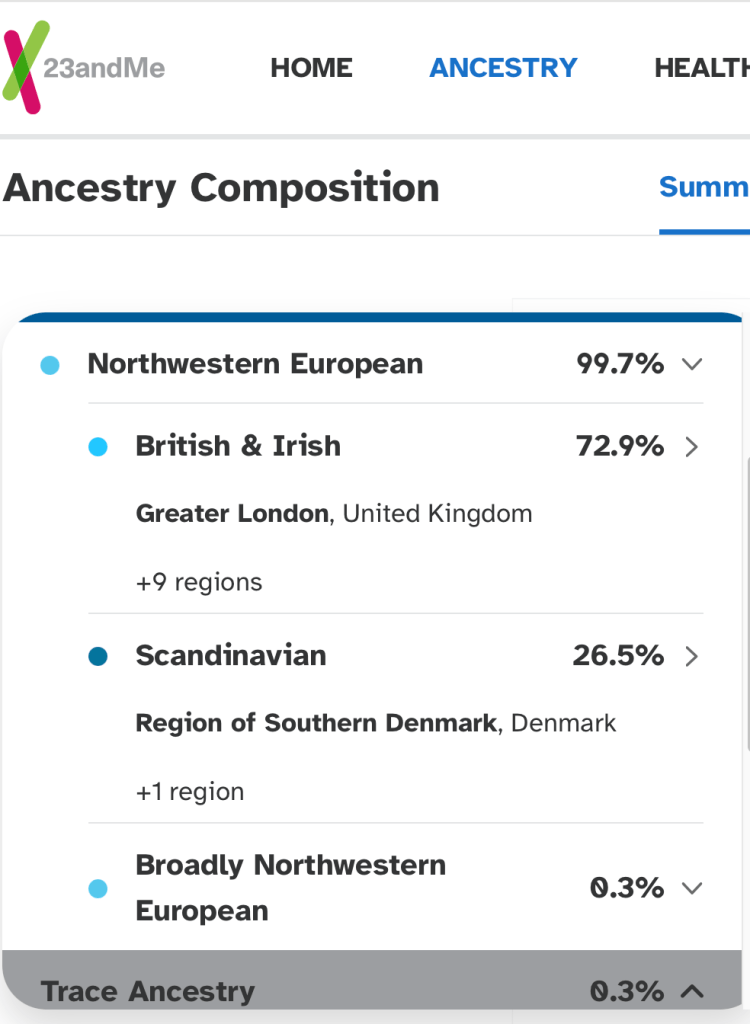
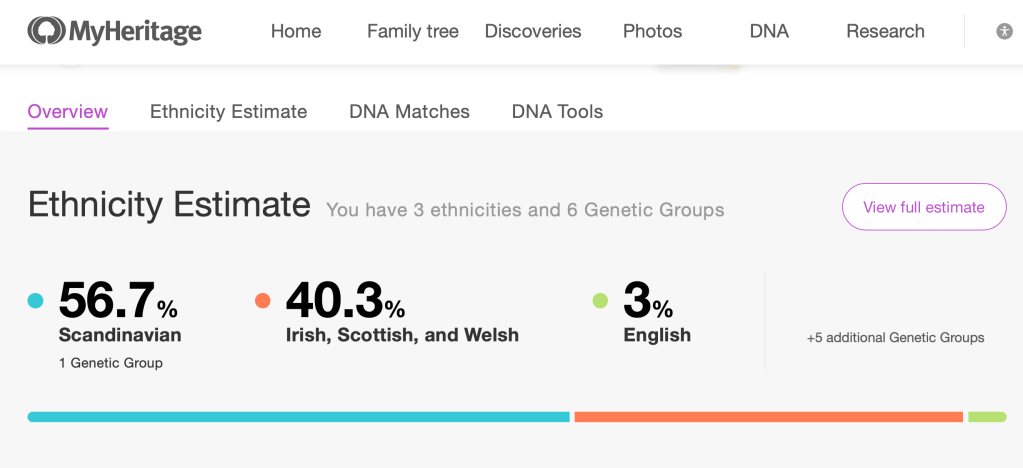
Let’s compare two ethnicity estimates for the same person, as illustrated by 23andMe and MyHeritage and decide for yourself.

The discrepancy depends heavily on the algorithm used by each company (how they calculate), the regions they define on a map for ethnicity, and their sample size, as each company’s DNA sample population increases over the years and they have more data to compare to.

Faced with these somewhat contradictory reports, I wonder if 23andMe lumps Wales, Ireland and Scotland in under larger umbrella of “British and Irish,” whereas MyHeritage seems to define Celtic/Gaelic populations separately from their AngloSaxon neighbours. Thus, the overwhelming percentage of “British and Irish” in the first image is broken down further in the second to recognize Celtic/Gaelic ancestors.

My advice is to take this all with a grain of salt.

In the case of adoption and unknown parentage, genetic genealogists may use two or more DNA databases in their search to cover as much DNA evidence as they can to triangulate data and reach a conclusion.

You can do the same. If you have already had your DNA analysed by 23andMe or Ancestry, you can download the data and upload it for free to MyHeritage and other sites to access their DNA pools and compare results, as I have shown above. Make sure you trust the company and read their privacy policies before doing so. Then, aggregate the ethnicity estimates if what you’re really looking for is your own particular list of ingredients.

Keep in mind – genealogy is fundamentally the pursuit of documentary evidence regarding our ancestry. Pair what you learn about your DNA with historical documents, photographs and other evidence to get the whole picture of your pedigree (my husband laughs whenever I use that word, but it’s correct).

If your have immigration data that shows your ancestor came from Denmark and your DNA shows matches with others from Denmark, congratulations! You probably are Danish. Just how much… now that’s a matter of conjecture.

The Genealogist as Arborist

Living in a post-WWII neighbourhood for the past 17 years, tree maintenance is something I take seriously. Dutch Elm disease took about seven of our elms not long ago, so maintaining the health of the trees that were left in our large yard became our priority.

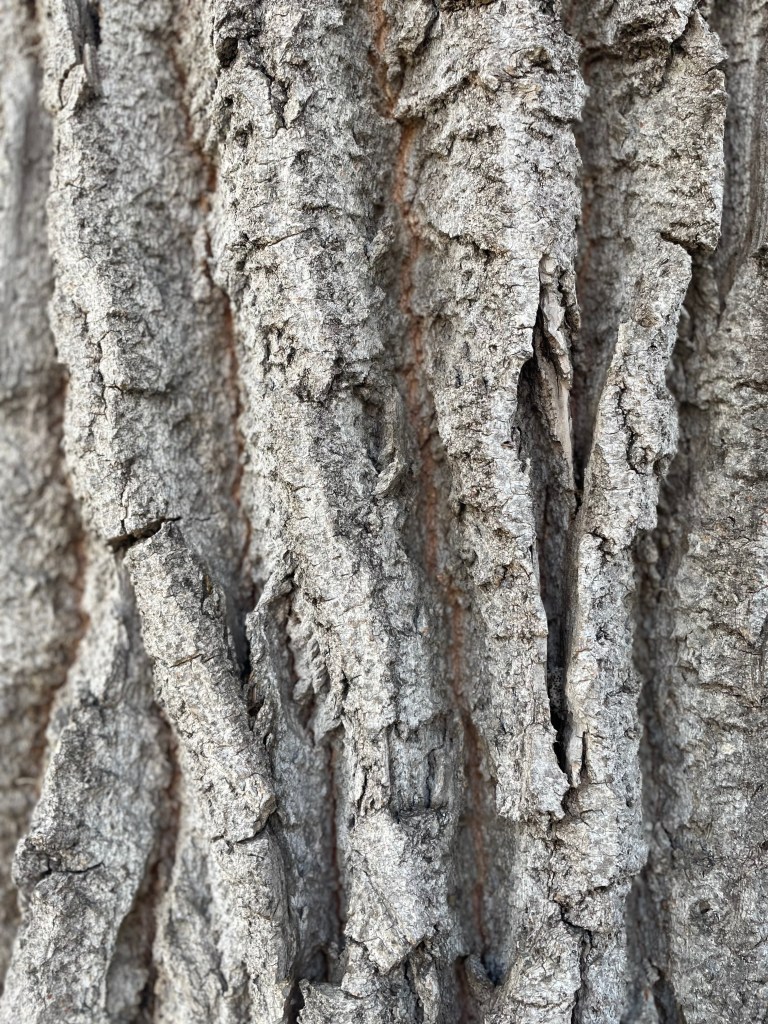
My favourite of all our trees is a massive 60 or 70 year-old cottonwood – a stately old thing with an attractive lean and a canopy that stretches like a ballerina’s arabesque across the width of the yard.

Despite my father-in-law’s insistence that one day soon the cottonwood will fall on my garage, an arbourist assured me the tree could well be standing long after I’m gone, and a little regular maintenance could assure that.

This is true for genealogical work as well. Trees posted online may outlive their owners, so be conscientious and try to make them as accurate as you can.

Not sure of a fact? Some websites allow you to tag a fact you’re unsure of, to warn others of your uncertainty. The worst thing we can do in posting our family trees is pass along false information to anyone viewing them. If you truly don’t know a fact, find a way to indicate that you’re guessing or approximating, or leave it out entirely until you’ve found a creditable source that provides the detail. Also, and I can’t emphasize this enough, add the citation for that source, and attach an image of the document (JPG, PDF), if possible, to the fact.

Do regular, light maintenance on your family trees. Check those hints you’ve been too busy to look at. New sets of data are digitized and transcribed all the time, especially now that AI can do the work. Do not trust hints blindly – analyze them for yourself before you accept them. Do they originate close to the timeframe in question? Are they a reliable source (i.e. governmental documents, contemporary newspaper articles)? Do they put the information you’ve posted previously about an ancestor into question? Do I need to reconsider my facts?

On that note, reassess assumptions you may have made earlier in your genealogical journey. I was pretty trigger-happy when I first got on Ancestry all those years ago, accepting others’ family trees without careful consideration. I you feel you may have added something dubious when you were in your genealogical salad days, it’s okay to remove that information. Pruning is allowed! It’s okay to admit you made mistakes driven by enthusiasm. When you know better, do better.

I’ve probably stretched this metaphor a little far, but it is important to consider the afterlife of any information you post online. If accuracy is what we’re seeking as budding or seasoned genealogists, we want our work to strengthen our family trees and benefit generations to come.

A cartography of the brain

For all the years I’ve been both a hobby and professional genealogist an amazing resource was at my disposal – my dad’s extensive cartographic knowledge of Western Canada.

The vast majority of my genealogical research is tracking immigration on the prairies (Manitoba, Saskatchewan and Alberta), which involves land grants and homestead registers. Understanding meridians, townships and all that stuff is key to locating farms and tracking the success or failure of immigrant families to develop their land.

I was lucky – my dad processed seismic data across Western Canada for the length of his career in the oil industry. Until last summer I could call him up, give him coordinates and he could tell me exactly where a homestead was located in the next breath. Honestly, he deserved a consultant’s fee, but I think he enjoyed impressing me with his accuracy based on fifty years of pouring over maps of the prairies. He was my very own Amazing Kreskin and Bill Nye the Science Guy, and it spared me a lot of time. Dad loved my genealogical work too; we were a mutual admiration society.

These days I’m pouring over maps on my own. Last fall, Dad had a massive stroke. He’s recovered remarkably, but his neural pathways are different than they were. I miss that bond – forged studying latitudes and longitudes, which seemed to shorten our physical separation of 1,340 km from Winnipeg to Calgary. Pushing 50 myself, I see how incredibly lucky I’ve been. We talk all the time and he’s still my dad but whenever I look past the 100th meridian West and beyond I get lonely for him – the man who taught me how to read a map in the first place.

Strength in numbers – you don’t have to go solo in genealogy

On the surface, genealogy is a solitary pursuit; scrolling through data in your home office, losing track of hours in search of that key document that will bring it all together. I rely on my dogs’ bladders to let me know when I’ve spent too much time staring at a screen – a furry head will rest itself on my knee as a sign to step away from the computer and let them outside. Dogs, family members and friends might not understand the addictive nature of genealogy but your fellow family historians will and it’s in your best interest to seek them out.

Local genealogy societies abound and are easy to find with a quick Google Search. Getting involved in these organizations as a member and/or volunteer can provide not only educational opportunities but a helpful network of folks with common experiences.

In my neck of the woods, the Manitoba Genealogical Society is an excellent place to geek out with other members about recent finds, specific resources and all the anecdotes in between. A group of family historians can brainstorm a problem and break through “brick walls” far more easily than you can on your own. In gaming terminology, it’s a quick way to “level-up” your research abilities over a cup of coffee or an online conference with like-minded individuals.

Social interaction is also a critically important contributor to good health and longevity. I know I benefit from it as someone with a disability who works from home.

Make it your goal to “get social” and visit your local genealogical society today. You’ll never regret it. 🙂

Elderly relatives & important conversations

Personal and family events in the last year have made me reflect on how fragile oral history can be. Don’t take for granted the relatives or family members who act as the collective memory for your extended family. As we crest the oncoming tsunami of dementia among Baby Boomers, make sure to ask the seniors in your life the genealogy questions you’ve been wondering about. Strokes, and other cognitive impairments can also steal memories from those we love.

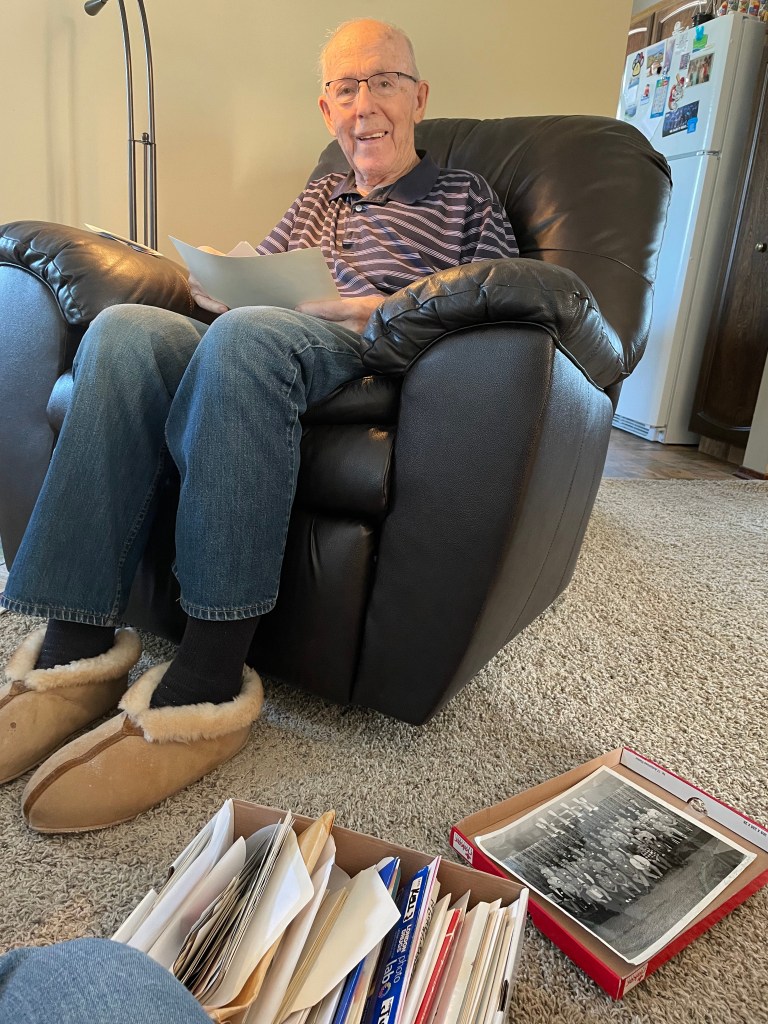
But how to go about it? One of the simplest ways is to go through shoeboxes of photos, old albums, or slide trays long dusty in the cupboard with your aging loved one at the kitchen table. Anecdotes are my favourite way to learn family history, and while not necessarily always accurate, there is usually a kernel of truth in even the wildest stories you might hear.

Visual cues from photos will bring these memories to light far more easily for them than just textual documents. Make a pot of tea or grab some cold beers and pull out the albums you haven’t seen since you were a teenager. Gather three generations, pop some popcorn and let your loved one tell stories with an old-fashioned slide show (everyone loves a slide show), or scan them to a Power Point document and go digital.

Life can turn on a dime. Memory retention is not a given. Facilitating the transfer of family lore is an important part of family bonding that neither of you will regret.

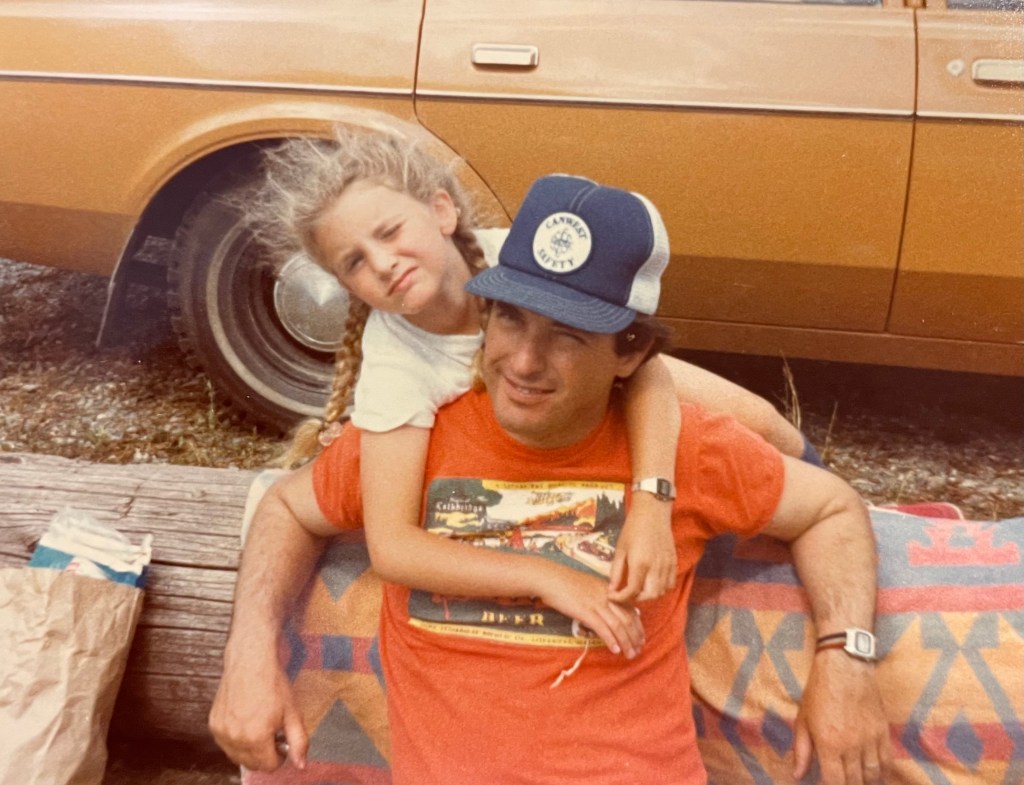
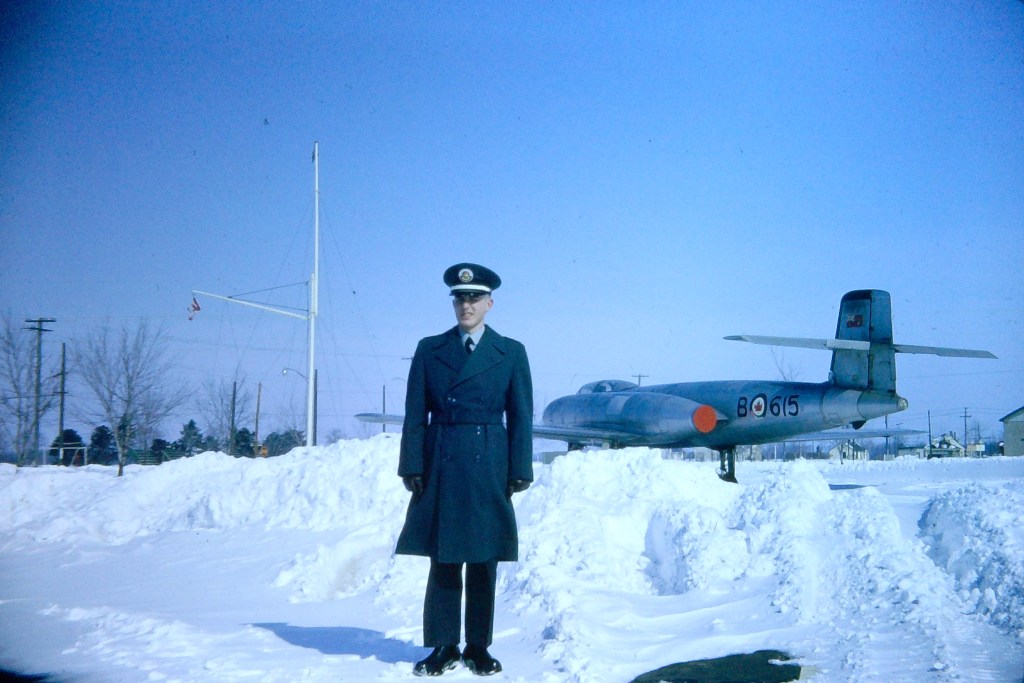
With love to my dad, Robert Gaede (see below), and my father-in-law (above).